PROJECTS
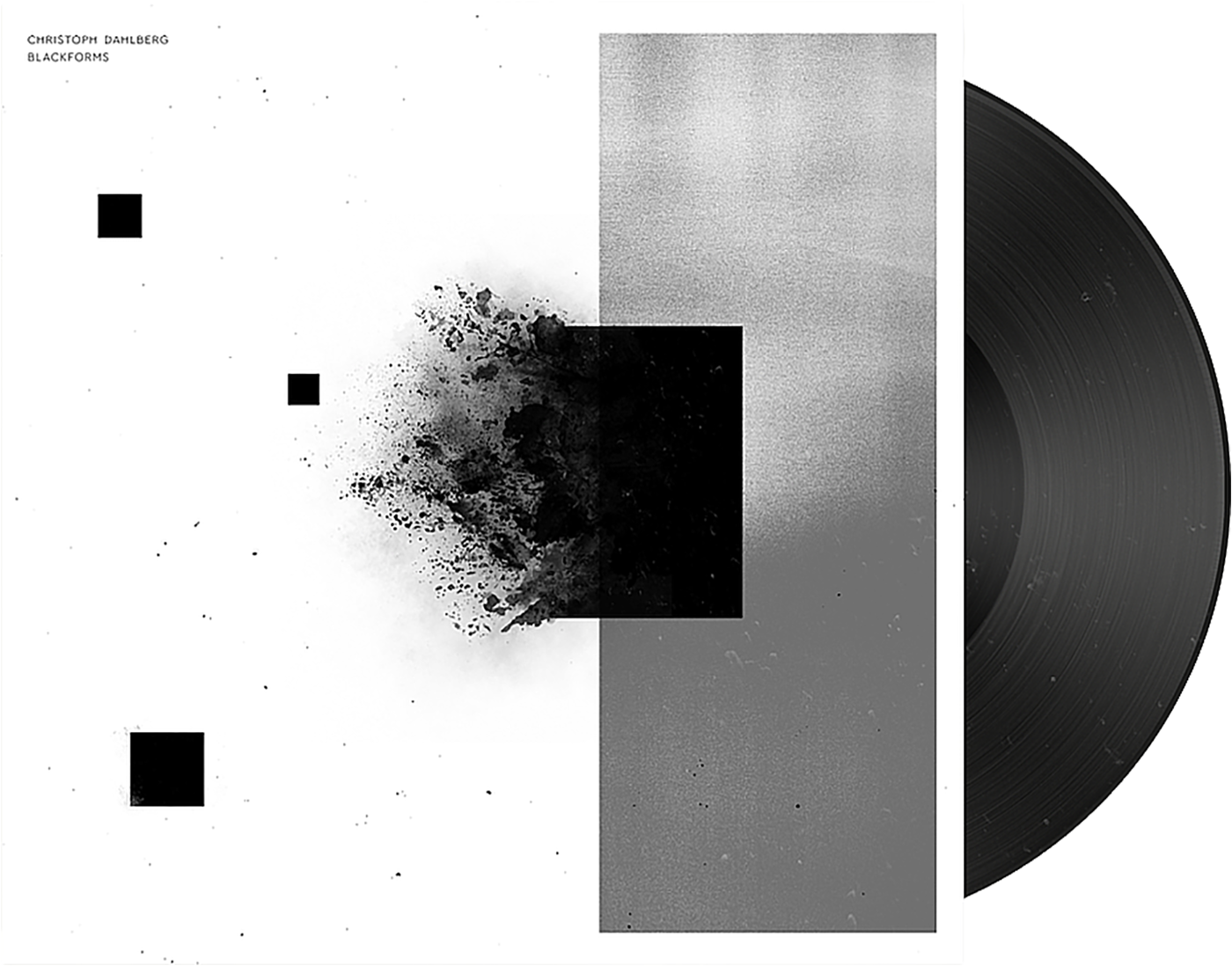
BLACKFORMS
Movement, change, constant transformation: omnipotent motifs that have always run through the interdisciplinary work of Christoph Dahlberg.
Whether as a visual artist creating sometimes flowing, sometimes rugged forms of bronze and steel, or as a musician, producer and performer creating multimedia sound worlds between ambient, industrial and electronica. On his second studio album Blackforms, the 40-year-old now embarks on an atmospheric journey of self-awareness that leads from darkness through light and finally ends in universal nothingness.
On his concept album Blackforms, Christoph Dahlberg walks in a stylistic grey zone of experimental electronica, noisy ambient and atmospheric neo-classical music, in which the boundaries between deconstruction and transformation seem to melt into a gigantic black noise. Blackforms is the result of nocturnal thought loops that Christoph Dahlberg processed in recording sessions that often lasted for days into a cinematic, compositionally astonishingly consistent piece of music. A transformative creative process in which each track represents a separate station on the journey into the endless void. Dahlberg was supported by cellist Tobias Unterberg (The Inchtabokatables, Deine Lakaien, Chamber), who lends the synthetic sound sculptures an organic, chamber music facet. Among others, the works of German-language poet Paul Celan and the oppressive widescreen force of Anselm Kiefer, whose painting Dahlberg retrospectively describes as his personal introduction to abstract art, served as particular inspiration. “Sometimes the view into the abyss is so terrible and frightening that something moves inside you.” A movement that Christoph Dahlberg instigates with Blackforms.
BLACKFORMS
HEAVEN AND HELL
KRISTALL
A QUIET PLACE –
MEMORIAL RAVENSBRUECK
A Quiet Place Audiovisual Installation, 2022
The Ravensbrück Memorial is a place that has never let go of me since my youth in the nineties. The pandemic created the space to finally begin this long-postponed confrontation.
Multiple visits in the cold of winter, intensive reading on the history of the women's concentration camp, and drone footage from up to two hundred meters high formed the foundation of an audiovisual work that translates the silence and heaviness of this place into a tangible form.
On the 78th anniversary of the liberation of the concentration camp, the first presentation took place in the former guardhouse at the main gate of the memorial – the beginning of an artistic vocabulary in the language of remembrance.
A QUIET PLACE – MEMORIAL RAVENSBRUECK
KLANGINTERVENTION –
GEDENKSTÄTTE JVA
WOLFENBÜTTEL
After completing the work in Ravensbrück and the Blackforms project, the focus once again turned to using art as a language of remembrance in memorial culture. A collaboration with Leuphana University began, resulting in the project ‘Hearing Spaces’ at the Wolfenbüttel Memorial.
This project proved to be another new experimental space for using sound as a medium of contemporary memorial processes. The approach of setting a physical place to sound proved particularly effective. In this case, it was a burial ground of victims executed in Wolfenbüttel during the Nazi era.
An artificially created acoustic space overlays the physical memorial site and reorders its perception. Binaurally produced sound surfaces, heard through headphones, create a spatial presence that does not exist at the site itself – a transphonic experience in which sound becomes a direct emotional access to memory. The place speaks, the composition amplifies.
During a guided tour with approximately twenty participants, the sound intervention was tested for the first time. Looking at the ivy-covered gravestones, headphones on their ears, the physical place merged with the acoustic space into a deeply personal experience. The reactions of the participants confirmed what had already been hinted at in previous projects: sound reaches levels that language alone cannot touch.
From 2026, the sound intervention will become an integral part of the memorial’s educational work. The artistic research and three consecutive projects reveal enormous potential to implement the ‘Hearing Spaces’ project at further forgotten memorial sites from the Nazi era. A time of change that relies on new strategies for access to and understanding of memory makes this approach of particular significance. Using art as access to and contribution to an understanding of the past represents a further opportunity for emotional mediation – and an invitation to collaborate.